
Restumping in Eaglehawk
Eaglehawk was its own town for 132 years, and its gold was shallow — both of which matter more to your house than you’d think.
Shallow workings disturb the ground at the depth footings and stumps actually sit in. Deep shafts, for all their drama, don’t.
"Upside down country"
Eaglehawk’s rush began in 1852 — reportedly when Joseph Crook found a nugget while out looking for horses. What followed was alluvial mining: surface and near-surface digging, working the gold out of the ground rather than following reefs a kilometre down.
By the 1870s the result was described in terms that are hard to improve on. When Canterbury Park was set out in 1873, the land it was created on was called “upside down country” — a denuded ruin of alluvial gold workings.
That phrase is the most useful thing on this page, because it describes exactly the condition that affects buildings. Ground that has been dug over, tipped back, and left to settle on its own is uncompacted. It consolidates for decades. And it sits at the depth where stumps and footings actually bear.
Compare that with the deep-shaft country elsewhere on the field. When more than 1,600 Bendigo shafts were filled or capped between the 1930s and 1950s, the method depended on depth — shafts under roughly 50 metres were filled with mullock, deeper ones capped with reinforced concrete. Shallow-workings country got the uncompacted fill. And under AS 2870, cut and filled sites and uncontrolled fill deposits are listed triggers for a Class P classification — the same list mine subsidence appears on.
[[VERIFY — whether residential Eaglehawk sits on reworked alluvial ground, and roughly where. Canterbury Park is confirmed; extending it to housing is currently an inference. Check the Historical Mining Activity dataset and the 1993 heritage study before publishing this as applying to houses.]]
The goldfield, the clay, and how to tell the three causes apart →
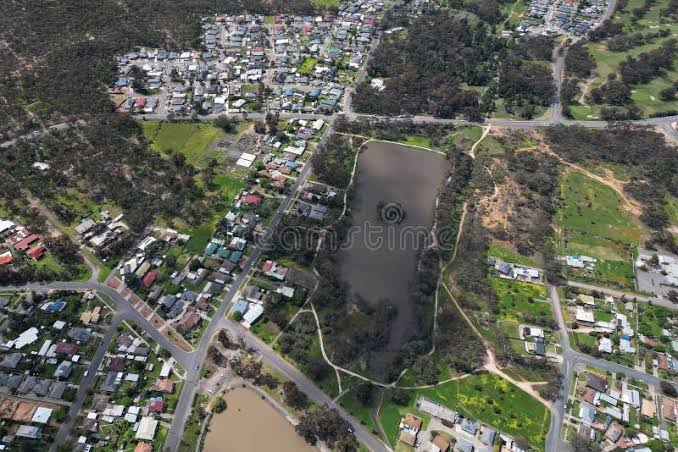
Eaglehawk wasn't part of Bendigo
Bendigo sits on a combination no other Australian city has. There is reactive clay through both the established suburbs and the newer estates — soil that swells when it takes on water and shrinks back when it dries, lifting and dropping through the seasons.
Underneath that is the most heavily mined ground on earth. The Bendigo goldfield runs across roughly 16 kilometres by 4 kilometres and contains 37 separate gold-bearing quartz reefs. More than 5,000 gold mines were registered on it. At least 140 shafts went deeper than 300 metres, 67 deeper than 600 metres, and 11 past 1,000 metres — the largest concentration of deep shafts anywhere in the world.
That 16 by 4 kilometre area is not an industrial zone on the edge of town. It is residential Bendigo. The reef lines run north–south at an acute angle to the street grid, which means they cut diagonally beneath established streets rather than following them. The Deborah, Sheepshead and Garden Gully reefs pass under Golden Square; the Deborah line followed the route of Old Violet Street.
Ground disturbed by shallow historic workings, poorly backfilled shafts and old stope voids does not settle evenly. Neither does reactive clay. Stack the two and you get a city where the honest answer to “why is my floor sloping?” is genuinely “it depends, and it is worth finding out which”.
What Eaglehawk houses are built like
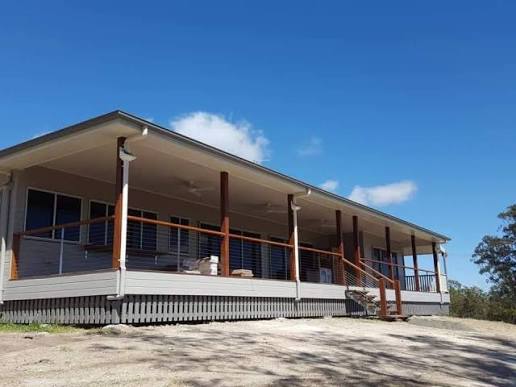
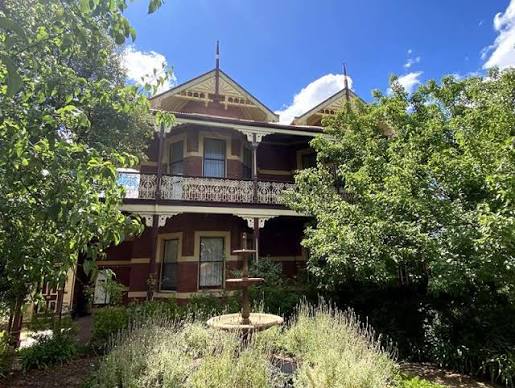
The Eaglehawk heritage precinct’s residential streets are mainly mid-to-late 19th century and Edwardian, clad in both brick and weatherboard — including parts of Panton and Victoria Streets, and a notable villa group in Church Street opposite the state school.
What that means underneath:
- Weatherboard on stumps — original timber that’s now been in central Victorian clay for anywhere from 130 to 170 years. Failing at ground line is the normal outcome, not a surprise.
- Brick on strip footings — no stumps to replace. Where a brick house here is moving, the question is footings and ground, which means underpinning rather than restumping.
- Both on one street, and sometimes both on one house where a later addition differs from the original.
- Villas alongside cottages — different construction quality, different footing detail, different behaviour.
So “what does restumping cost in Eaglehawk” depends first on whether your house has stumps at all. Restumping, reblocking and underpinning — the difference →
Heritage-listed and heritage precinct houses
What’s protected in Eaglehawk
Eaglehawk contains individually significant heritage places, including the Town Hall and Mechanics Institute on the Victorian Heritage Register, as well as a number of heritage precincts protected under the Greater Bendigo Planning Scheme.
Precinct protection is the one that catches people out, because it applies to ordinary houses rather than landmarks. A modest weatherboard cottage can sit inside a heritage precinct without anything about it looking listed.
A building permit may not be enough
If your property is affected by a Heritage Overlay, don’t assume structural work such as restumping or underpinning can proceed on a building permit alone.
The City of Greater Bendigo advises that buildings and works in a Heritage Overlay usually require a planning permit, although many minor works may qualify for exemptions under the Greater Bendigo Heritage Incorporated Plan. Whether a planning permit is required depends on the individual property, the proposed works, and any exemptions that apply.
Worth knowing why this matters for restumping specifically: the work can change the floor level of a building, alter visible stumps, and affect subfloor vents — all of which are external and potentially visible.
What to confirm before you get quotes
Two things, and both are quicker to establish now than after a contract is signed:
- Whether your works need planning approval, a building permit, or both. Confirm it with the City of Greater Bendigo rather than assuming either way.
- Who prepares and lodges any applications. Your builder, a designer or a planning consultant may do it — but it should be stated in writing rather than assumed, because it affects both cost and timeline.
A quote that hasn’t accounted for a planning permit isn’t comparable with one that has. The nine questions to ask any quote.
What's most likely moving your Eaglehawk house
- Stumps at end of life. The most common answer on 19th century weatherboard, by a wide margin. Restumping →
- Water arriving somewhere it shouldn’t. A downpipe discharging beside the house, a cracked stormwater line, ground falling towards a wall. Cheapest thing on this list, and it drives both timber rot and clay movement. Drainage and subfloor →
- Joists rather than stumps. If the floor springs instead of sagging, it’s a cheaper problem. Bouncy floorboards →
- Reworked or uncompacted ground. Consolidating fill from historic alluvial working — the “upside down country” problem, and the one that’s more relevant here than in the deep-shaft parts of the field. Underpinning →
- Seasonal clay movement. Reactive clay with deep-movement classifications, cycling every year. Frequently manageable with drainage rather than structural work.
Note that four of those five are cheaper than the one everyone worries about. An assessment establishes which.

What it costs in Eaglehawk
- Per stump, installed — around $280 to $550
- Full restump — typically $12,000 to $30,000
- Jack and pack — On Assesment
- Underpinning — typically $15,000 to $40,000+
Two Eaglehawk-specific factors: low subfloor clearance on 19th century cottages pushes labour up, and where a site classifies as Class P — uncontrolled fill and mine subsidence are both triggers — footings must be specifically engineered, which is a separate cost line from the construction. Ask whether a quote includes it.
Full cost breakdown, and the nine questions to ask any quote →
Our Other Services
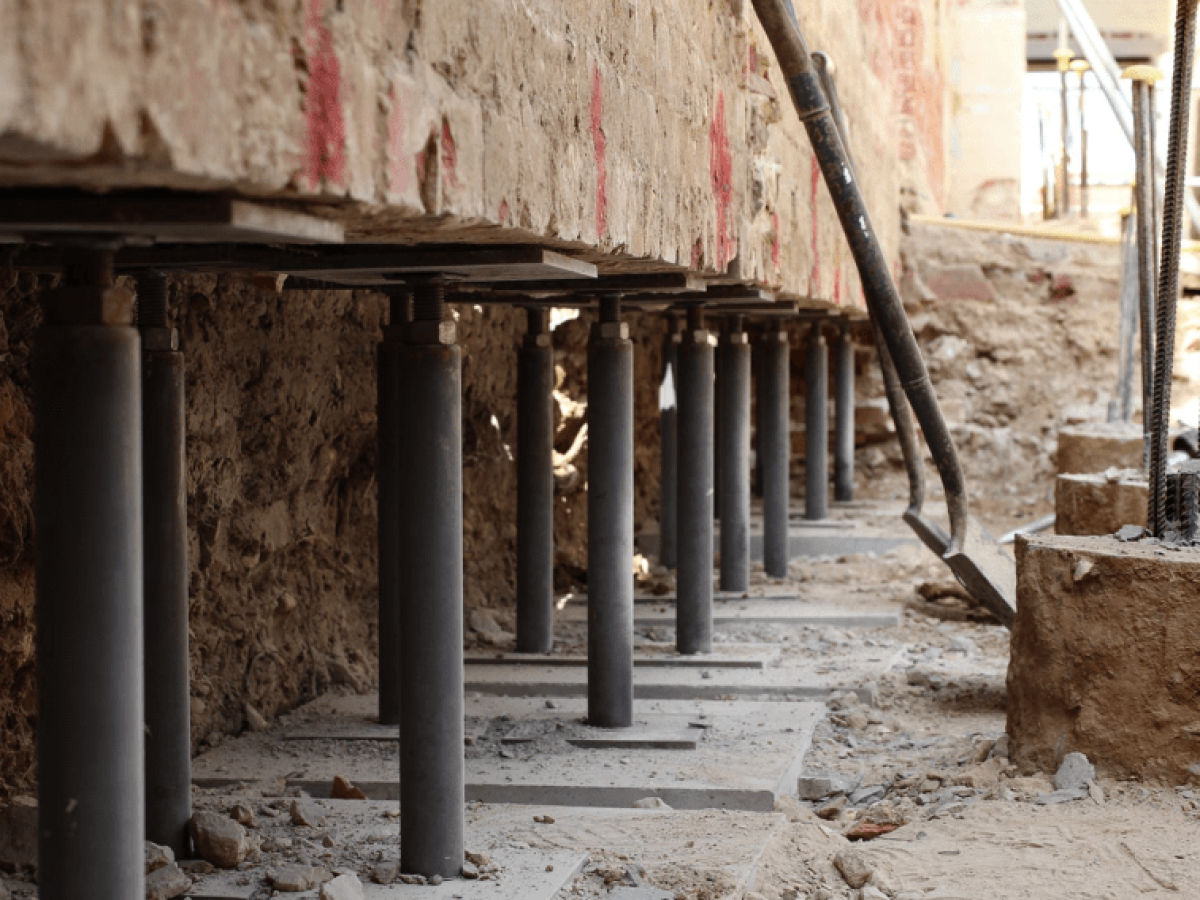
Underpinning
A different thing entirely. Underpinning strengthens or deepens the actual footings, for when the ground has moved rather than the stumps failing. The answer for slab-on-ground homes and houses over disturbed or undermined ground.
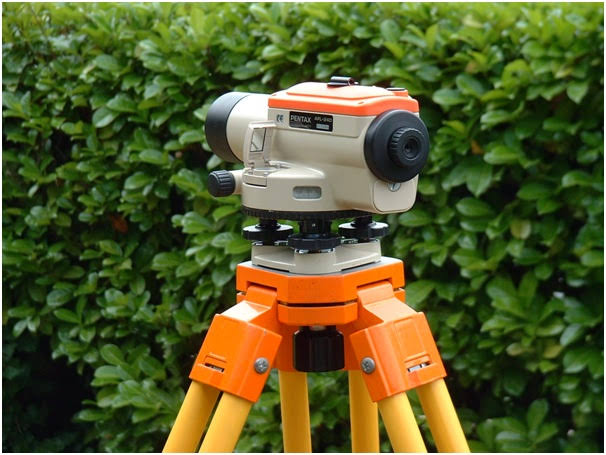
Levelling & Relevelling
Bringing a floor back to level without replacing everything — sometimes on its own, sometimes as part of a restump. Occasionally it’s all a house needs.
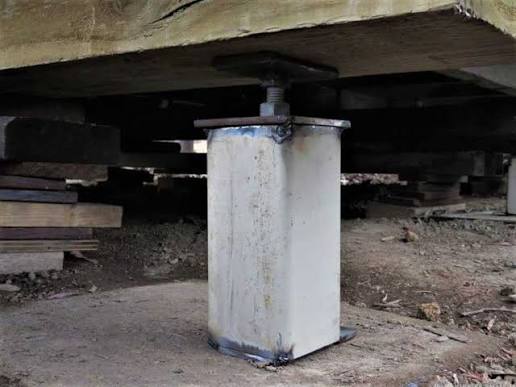
Jack & Pack
Packing and adjusting sound existing stumps to bring the floor back to level, instead of replacing the lot. Far cheaper than a full restump — and if your stumps are structurally fine and have just settled, it may be all you need.
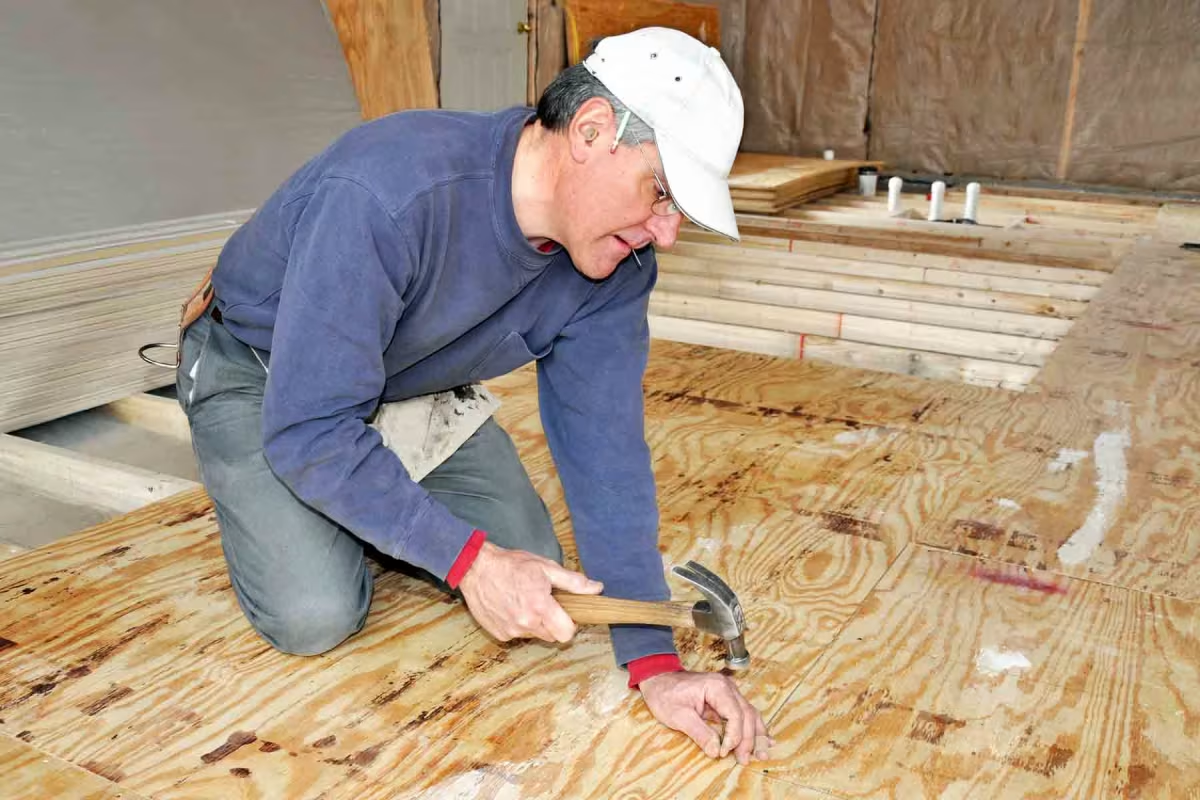
Subfloor Repairs & Ventilation
Rotted bearers and joists, damaged floorboards, and the subfloor ventilation that caused the problem in the first place. Replacing stumps without fixing poor ventilation just restarts the clock.
Find out what's under yours
Five questions — what you’re seeing, what the house sits on, roughly when it was built, why you’re looking into it now, and how to reach you.